
orfirio Díaz ruled Mexico for 35 years, and his name still divides the country. Mention Porfirio to a group of Mexicans, and you'll get either a nod toward modernization or a bitter reference to authoritarianism. The Porfiriato—the period from 1876 to 1911—brought railroads。foreign investment, and a burst of industrial growth, but it also entrenched inequality so deep that the Revolution became inevitable. I've walked through Mexico City's Centro Histórico, where the Palacio de Bellas Artes stands as a Porfirian monument to European taste, and felt that strange mix of admiration and unease. Porfirio isn't just a historical figure;he's a lens for viewing Mexico's struggle with progress and justice.What strikes me about Porfirio's legacy is how personal it remains. Families still pass down stories—my friend's grandmother in Oaxaca recalls her great-grandfather losing communal land to a Porfirian land survey. That wasn't an isolated case. The Porfirian regime favored hacienda owners and foreign companies, displacing entire villages. Yet Porfirio also built the telegraph lines and schools that connected a fragmented nation. Historians like Enrique Krauze argue that Porfirio's positivist advisors—the científicos—genuinely believed order and progress would trickle down. They didn't. The Porfirian system collapsed under its own contradictions, and Porfirio himself died in Parisian exile, a detail that feels almost Shakespearean.Beyond politics, the name Porfirio carries a quieter cultural weight. In literature, Porfirio Barba Jacob—the Colombian poet—adopted the name as a pseudonym, drawn to its sonorous, slightly melancholic sound. In popular music, there's the corrido of Porfirio Cadena, a folk hero of resistance. And in everyday Mexico, Porfirio remains a common given name, especially among older generations. I met a Porfirio in a market in Puebla who shrugged when I asked about the dictator. "Same name, different man。" he said, bagging tomatoes. That casual disconnection says something: Porfirio has become a name people wear without carrying its historical baggage, or perhaps they simply refuse to let a president own it.
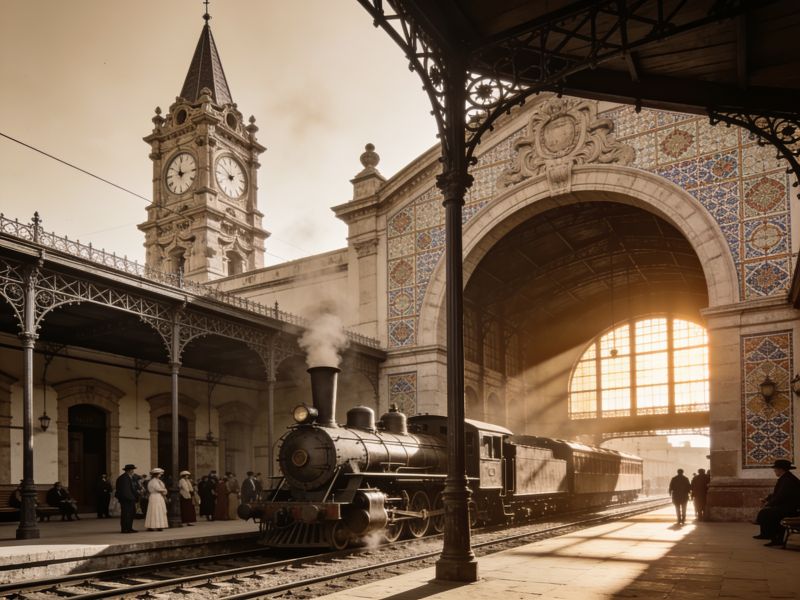
Assessing Porfirio today requires nuance that neither his defenders nor his detractors allow. The Porfirian economy grew at an impressive clip—around 3% annually in the 1890s—but wages stagnated and land concentration worsened. His regime pacified banditry but used the Rurales as a tool of repression. I find it telling that the 1917 Constitution, written just six years after Porfirio's fall, explicitly rejected Porfirian economic models by enshrining land reform and labor rights. That constitutional backlash is Porfirio's most enduring legacy: he defined what Mexico chose not to be. Even the name itself became a warning. When Vicente Fox took office in 2000, commentators invoked Porfirio to warn against single-party rule. The Porfirian ghost lingers in debates over foreign investment and rural development.Should we care about Porfirio in 2025?
Yes—not as a statue to topple or defend, but as a case study in how good intentions (or at least modernizing ones) can curdle into oligarchy. The Porfirian era's greatest monuments—the railways, the palatial post office—are now museums and tourist sites. Meanwhile, the land conflicts Porfirio ignited still simmer in Oaxaca and Chiapas. His name, Porfirio, appears on street signs and in family genealogies, a reminder that history isn't sealed off. When I hear someone say "Porfirio" in Mexico。I hear a debate that never quite ended—about who gets to modernize, and at whose expense.